26 May 2026
7 Things to Do Before the June 2 DSA Deadline
The DSA application window closes June 2 at 4:30pm. Before you hit submit — or if you already have — here's the checklist most families miss.
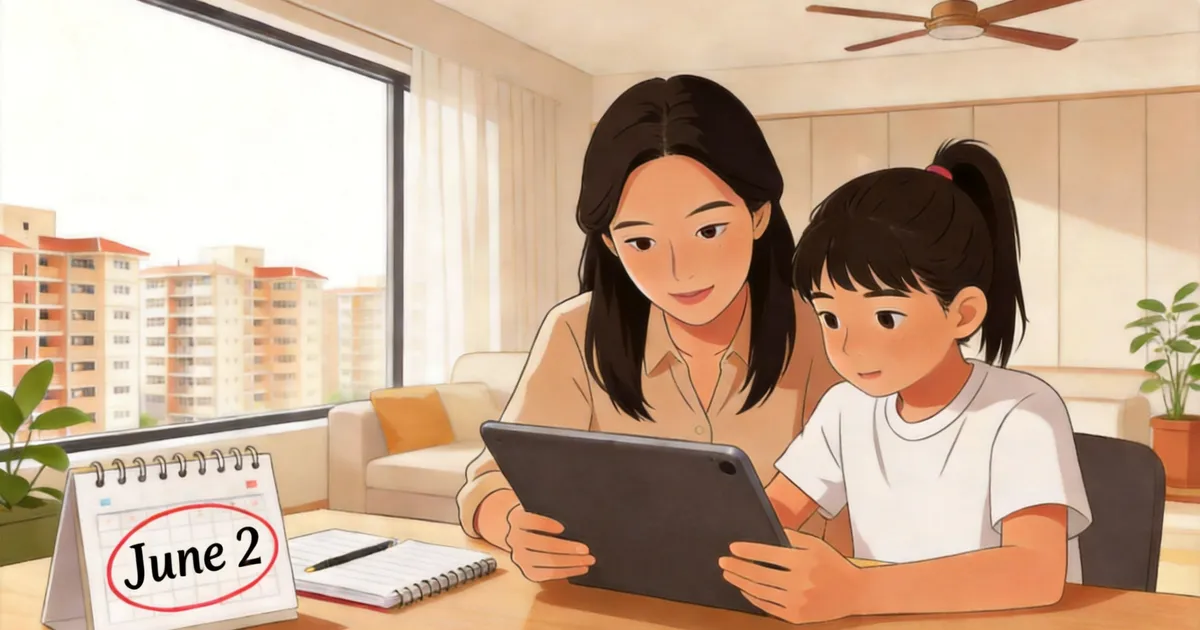
The DSA-Sec application window closes on 2 June 2026 at 4:30pm. That's not a soft deadline — the portal shuts. No extensions, no late submissions.
Most families focus entirely on which schools to apply to and miss several things that matter just as much. Here's what to check before that window closes.
1. Confirm your school choices with real data
Gut feel isn't a strategy. Before you finalise which schools to apply to, run the numbers.
The key question isn't "is this a good school?" — it's "is my child a realistic candidate for this school's DSA programme, given their current ability level?"
That means looking at PSLE Cut-off Points from the past three years, not just the current year. A school that looks accessible this year might have trended upward consistently. One that looks out of reach might have more variance than you expect.
Use our School Finder to filter by talent area, PSLE COP range, and location — it covers the 143 secondary schools that list DSA talent areas and makes this comparison significantly faster than doing it manually.
2. Understand the MOE application limits
You can submit up to 3 school-talent area choices in total, with a maximum of 2 choices from the same school.
This is a hard cap. If you apply to School A for both Dance and Art, that uses 2 of your 3 choices — leaving you one more slot for a different school entirely.
Common mistakes:
- Applying to too many schools in the same tier, leaving no "safer" option
- Using both slots at one school for talent areas your child is less prepared in
- Not checking whether a school's specific DSA talent area is actually competitive (some attract far more applicants than others)
Think of it as a portfolio: one reach, one realistic, one safe — spread across talent areas your child can genuinely perform in.
3. Verify the school's open house or trial schedule before submitting
Some families submit first, then discover they missed an open house that would have changed their decision.
If a school has an upcoming open house you haven't attended, it's worth going before you finalise — especially for schools you're less certain about. Not sure what to ask? Here's what to look for at a DSA open house. Our Open House Calendar has the upcoming dates.
If you've already missed an open house, check our Open House Takeaways page — we've compiled what parents reported from recent visits. Our 23 May open house recap is another quick way to catch up.
4. Know exactly what happens after you click submit
Most parents assume there's a long wait. There is — but the clock starts faster than you think.
| Date | What happens |
|---|---|
| 2 June, 4:30pm | Application portal closes |
| June to August | Each school runs its own shortlisting, trials and interviews, on its own schedule |
| By 28 August | All applicants receive their DSA-Sec outcomes from the schools |
The key detail: MOE does not publish trial or interview schedules. Each school sets its own timeline and contacts shortlisted applicants directly, and some publish dates on their own websites. You might get three weeks' notice before a trial. You might get three days.
So check each school's website, and keep an eye on your email and phone.
5. Start trial preparation now, not when the notification arrives
If your child hasn't started preparing, June 2 isn't the finish line — it's the start of the real work.
The June holidays run from 30 May to 28 June: 30 days you can absolutely use, whenever your schools' trials turn out to be. Every family that walks into a trial looking composed and ready used that window.
We wrote a full breakdown of what "trial-ready" looks like for each talent area — Dance, Music, Sports, Visual Art, Drama, Debate, and STEM — including what to have finished before 28 June:
→ You Submitted Your DSA Application. Now Stop Relaxing.
6. Prepare the self-introduction — it's not optional
Selection formats vary by school, but many include an interview. When there is one, the first question is often some version of: "Tell us about yourself."
It sounds easy. It isn't — not at 12 years old, in front of a panel, while also nervous about the performance trial they just completed.
A good self-introduction:
- Takes under 90 seconds
- Covers name, school, and CCA (with specific detail, not "I like dancing")
- Explains why they applied to this school specifically — not a generic answer
- Sounds natural, not memorised
Your child's primary school CCA meets twice a week. That's the proof of sustained commitment interviewers look for. Make sure it's in the introduction.
Practice it out loud. More than once. With someone who will actually give real feedback.
7. Get reminders for what comes after
After June 2, the next critical dates are:
- June to August — schools contact shortlisted applicants directly and run trials and interviews on their own schedules (MOE doesn't publish them, so check each school's website)
- 28 August — all applicants receive their DSA outcomes from the schools
- 19–23 October — School Preference exercise, if your child has a Confirmed Offer or Wait List
If you'd rather not track these manually, we send reminder emails before each key milestone — including when interview season begins and when to expect a decision.
The short version
Before June 2:
- ✅ Confirm choices using real PSLE COP data
- ✅ Stay within the 3-choice, max-2-per-school limit
- ✅ Check any remaining open houses
- ✅ Understand the post-application timeline
- ✅ Begin trial preparation — the June holidays are your window
- ✅ Practice the self-introduction
- ✅ Set up reminders for the dates that follow
The deadline is a formality. What happens in the six weeks after is where DSA is actually decided.
Free · No spam
Get DSALink updates
New DSA guides on schools, interview prep and coaches, sent to your inbox from time to time. No spam.
Follow us
Daily DSA tips, school news, and quick guides across: