25 May 2026
You Submitted Your DSA Application. Now Stop Relaxing.
Some schools give 3 days between the invitation and the trial. Three. Here's why the June holidays are the most important 30 days in your child's DSA journey — and what to do with them.
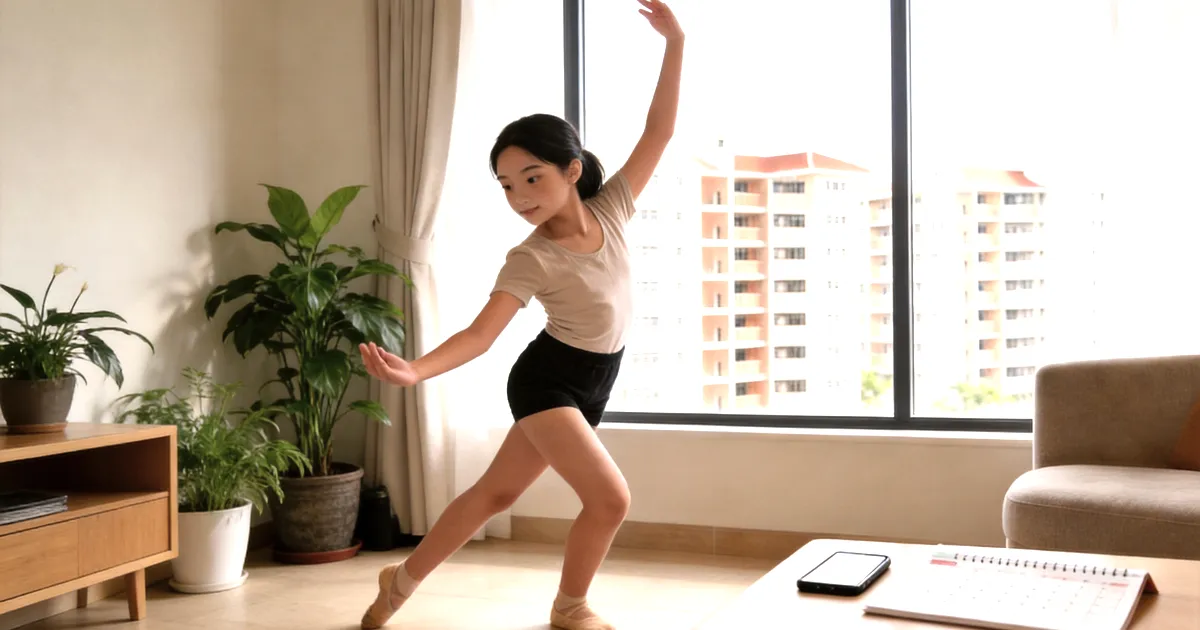
Imagine this: it's a Thursday afternoon in July. Your phone buzzes. It's an email from a school your child applied to. They've been shortlisted. The trial is this Sunday.
Three days.
This has happened to real families in past DSA cycles. Not as a worst-case scenario — just as a Tuesday. (Or Thursday, in this case.)
If your child is prepared, three days is plenty of time to rest and sharpen. If they're not — well, you're about to spend a very stressful weekend on YouTube learning what a 1-minute dance solo is supposed to look like.
Here's what actually happens after June 2, and what you should be doing right now.
The timeline most parents don't know
Everyone knows the application closes 2 June at 4:30pm. What fewer people know is what comes after.
| Date | What happens |
|---|---|
| 30 May – 28 June | June school holidays |
| June to August | Each school shortlists, then runs its own trials and interviews, on its own schedule |
| By 28 August | All applicants receive their DSA-Sec outcomes from the schools |
The key detail: MOE does not publish trial or interview schedules. Schedules vary by school; each one contacts shortlisted applicants directly, and some post dates on their own websites. When the invitation comes, the clock starts immediately.
So how long do you actually get?
It depends entirely on the school. Based on past DSA cycles:
- Some schools give 2–3 weeks between notification and trial
- Some give less than a week
- At least one school has given 3 days
There is no minimum notice period requirement. A school can — and does — send an invitation on Monday for a trial on Thursday.
Which means the only safe strategy is to be ready before the notification arrives.
What does "ready" actually mean?
Jump to your talent area:
- Dance
- Music
- Sports
- Visual Art
- Drama / Performing Arts
- Debate / Public Speaking
- STEM / Robotics / Infocomm
Dance
You need a 1-minute solo. Any genre. Any style. Classroom-sized space.
Sounds simple. It isn't.
A minute of polished performance takes weeks — picking the music, deciding the choreography, cleaning the technique, practising the expression so it doesn't look like your child is mentally running through a grocery list. Schools aren't just watching steps. They're watching presence.
If your child dances but doesn't have a solo piece ready today, build one now. Film it. Watch it back together. Fix it. Repeat.
Music
Expect a prepared piece on your instrument. Possibly sight-reading. Possibly a short music theory section. Definitely a question like "why did you choose this piece?"
The answer to that last question should not be "my teacher told me to."
Choose something your child genuinely connects with. Know the piece cold — not just the notes, but the feeling. Practice sight-reading regularly, even just 10 minutes a day. That's the part most students skip and then panic about. For what two Singapore music studios say schools actually listen for, see What Do Schools Really Look For in a Music DSA?
Sports
Here's the slightly different situation: most sports DSA shortlisting is based on existing results — national age-group rankings, inter-school competition records, national squad membership.
If your child has those, the trial (if there is one) is a confirmation, not a surprise. Focus on staying fit, sport-specific conditioning, and being ready to perform on demand.
If your child doesn't have that competitive record yet, it's worth being realistic about the shortlisting chances — and having a backup plan ready.
Visual Art
Two parts: portfolio review and sometimes an on-the-spot task (timed drawing or design exercise under observation).
The portfolio is something you curate now, not the night before. Pick 8–10 pieces that show range and growth — not just the ones that look impressive, but the ones that show process. Some schools ask students to talk through their work, so your child should be able to explain every piece in the portfolio. For what art DSA actually rewards, see our Art DSA analysis.
The on-the-spot task is about thinking visually under pressure. Practice drawing from observation or prompts regularly — it builds the muscle.
Drama / Performing Arts
Usually a prepared monologue or scene, followed by improvisation exercises.
The monologue is the easy part — you can rehearse that until it's perfect. Improvisation is where most students fall apart, because it can't be memorised. The only way to get better at improvisation is to do it repeatedly, with other people, in situations where you don't know what's coming.
If your child hasn't done that kind of practice, one week before the trial is too late to start.
Debate / Public Speaking
Two rounds: prepared speech and impromptu.
Most students obsess over the prepared speech and ignore the impromptu portion. That's backwards. The prepared speech can be written and rehearsed. The impromptu round — given a topic on the spot, 1–2 minutes to think, then speak — is what separates the candidates who are genuinely sharp from the ones who just have good scripts.
Practice the prepared speech until it feels natural (not memorised-robotically natural — actually natural). Then spend at least half your prep time on impromptu: give your child a random topic every day and have them speak for 90 seconds. No warning. Go.
STEM / Robotics / Infocomm
Often a problem-solving task in the room, followed by a panel interview.
The panel interview is where this gets interesting. Schools want to understand how your child thinks — not just what projects they've done. Your child should be able to explain their past projects clearly, talk about what went wrong and how they fixed it, and discuss what they'd do differently.
"We built a robot" is not an answer. "We built a robot to sort recyclables, the sensor kept misfiring so we switched from ultrasonic to infrared, and here's what I learned about calibration" — that's an answer.
The part everyone overlooks: the interview itself
Beyond the talent trial, most schools conduct a general interview. Think of it as a character check.
Common questions:
- Tell us about yourself (the one question everyone gets and no one prepares)
- Why this school, specifically?
- What will you contribute to the CCA?
- Tell us about a time things didn't go your way
These are not trick questions. But answering them clearly, warmly, and without sounding like a rehearsed robot — in front of a panel, at 12 years old, while also nervous about the trial they just did — takes practice.
Do mock interviews. More than once. With someone who will actually give feedback, not just nod encouragingly.
(We're building a full interview prep guide — check our DSA Interview page for what's available now.)
The math
June holidays: 30 May to 28 June. 30 days.
Whenever your schools' trials fall, this is the longest stretch of free time your child will have to prepare.
When the invitation comes, you might get 3 weeks. You might get 3 days.
Spend the 30 days as if the 3-day version is what's coming.
| Talent area | What to finish before 28 June |
|---|---|
| Dance | Solo finalised, filmed, and polished |
| Music | Prepared piece performance-ready. Sight-reading in daily rotation. |
| Sports | Conditioning plan running. Peak form by late June. |
| Visual Art | Portfolio curated and ordered. Every piece explainable. |
| Drama | Monologue memorised. Improv sessions happening weekly. |
| Debate | Prepared speech natural. Impromptu practice daily. |
| STEM | Past projects documented. Able to explain them out loud, cold. |
| All | Self-introduction practised. At least 3 mock interviews done. |
And if your child isn't shortlisted?
Not every applicant is invited to a trial, and every applicant receives an outcome from the schools by 28 August. If it's Unsuccessful, that's a hard thing to sit with — but it's not the end of anything.
DSA is a separate track. Not being shortlisted doesn't affect PSLE results, doesn't affect S1 Posting eligibility, and doesn't go on any record. Your child takes PSLE in October, gets their results, and goes through S1 Posting in December like everyone else.
The only thing that changes is you've got a very well-prepared kid who practised their self-introduction a lot.
One more thing
If you're reading this and thinking "we'll start preparing when the notification comes" — that's the plan most families have. It's also the plan that leads to a very stressful three days in July.
The families that walk into trials looking composed and ready? They used June.
Get reminders before key DSA dates — including when interview season begins. Subscribe here.
Free · No spam
Get DSALink updates
New DSA guides on schools, interview prep and coaches, sent to your inbox from time to time. No spam.
Follow us
Daily DSA tips, school news, and quick guides across: